Are NYC Taxis Safer than Uber?
Car Service
NYC transportation safety ultimately comes down to three pillars: vetting, insurance, and accountability. Yellow cabs, Uber, and licensed car services approach each of these differently—so the safest choice depends less on brand and more on the kind of trip you’re taking.

Are NYC Taxis Safer than Uber?
NYC transportation safety comes down to vetting, insurance, and accountability. Yellow cabs, Uber, and licensed car services each handle these differently. Here's the honest breakdown of which one wins for which kind of trip.

Safety is the question riders are quietly asking themselves every time they get into a vehicle they didn’t personally vet. Most of the time it doesn’t matter — the trip is short, the driver is fine, the ride ends without incident. But the moments where safety actually matters are exactly the moments people aren’t thinking about: a late-night airport pickup in an unfamiliar borough, a teenage daughter heading home from a Manhattan dinner, an elderly parent flying in from out of town, or a corporate executive carrying sensitive materials.
So how do New York’s three main for-hire transportation categories stack up on actual safety? Yellow taxis, Uber and Lyft, and licensed luxury car services all clear basic safety thresholds, but the differences in vetting, insurance, and accountability are real and they get bigger the more you look. We’ve been running Union Limousine across the New York Tri-State for years, and what follows is the honest comparison we’d give a friend asking the same question.
The Three Pillars of Transportation Safety
Safety in NYC for-hire vehicles comes down to three concrete things, not vibes:
- Driver vetting: who actually checked this person’s background, history, and competence
- Vehicle safety: who maintains and inspects the vehicle, and how often
- Insurance and accountability: who pays when something goes wrong, and who you call
Every safety question in this category eventually reduces to these three. Let’s walk through each option against all three.
How NYC Yellow Taxis Are Vetted and Regulated?
Yellow cab drivers in New York are licensed by the Taxi and Limousine Commission (TLC) and go through one of the more rigorous vetting processes in American transportation.
Driver Vetting
To get a TLC driver’s license, candidates must hold a valid New York State driver’s license, complete an approved 24-hour TLC driver education course, pass fingerprinting and an FBI background check, pass drug testing, complete defensive driving certification, and pass a medical exam administered by an approved physician. The fingerprinting and FBI check are the parts that distinguish this from a basic background check — the system pulls criminal records across state lines.
Vehicle Safety
Yellow cabs are subject to scheduled TLC inspections multiple times a year, plus immediate inspection if a passenger or driver files a complaint. The standardized fleet means parts, repair networks, and inspection protocols are well-established. Cabs typically operate on rotating shifts with multiple drivers per vehicle, which means they’re cleaned and inspected frequently.
Insurance and Accountability
Every yellow cab carries mandatory commercial insurance, typically at $1 million in coverage. The medallion system adds another layer of accountability — each cab has a number, an owner of record, and a complaint pathway through the TLC. If something goes wrong, you have a paper trail.
How Uber and Lyft Are Vetted?
Rideshare safety operates on a different model. Drivers are independent contractors using their own vehicles, and the platform layers a vetting process on top.
Driver Vetting
Uber drivers in NYC must hold a TLC for-hire driver’s license, which means they’ve cleared the same baseline TLC requirements as yellow cab drivers. On top of that, Uber runs its own background checks through third-party services. The vetting clears most basic concerns but is generally considered less rigorous than the TLC fingerprinting and FBI check process for medallion drivers, particularly for drivers operating in NYC who came through Uber’s onboarding flow first.
Vehicle Safety
Vehicles must meet TLC age and condition requirements. Beyond that, maintenance is the responsibility of the individual driver. Some drivers maintain their vehicles meticulously. Others don’t. The result is wildly variable: you might get a 2024 model in pristine condition or a 2017 vehicle with worn brakes and a check-engine light the driver has been ignoring.
Insurance and Accountability
Uber’s commercial liability coverage during active rides is comparable to taxi coverage. The gap appears during “app-on” periods (when the driver is logged in but not yet matched with a passenger). Coverage during those windows is more limited, which has been the source of legal disputes in incident cases. Accountability flows through Uber’s app rather than a regulator-supervised complaint pathway, which works well for most issues but adds friction in serious cases.
How Licensed Luxury Car Services Are Vetted?
Car services like ours layer additional vetting and standards on top of the baseline TLC framework.
Driver Vetting
Every chauffeur on our team is fully TLC-licensed (so they’ve already cleared the FBI background check, drug testing, and medical exam). On top of that, we run additional background checks at hire, require ongoing defensive driving certification, conduct internal training on customer service standards, and maintain immaculate driving record requirements. CDL drivers handling Sprinter vans, party buses, and charter coaches face additional federal DOT compliance requirements, including biennial medical certifications and Hours-of-Service compliance tracking.
Vehicle Safety
Our fleet is fully owned and maintained in-house. Every vehicle goes through scheduled maintenance on a fixed timeline regardless of mileage, plus pre-trip inspections before every assignment. Charter coaches receive electronic logging device (ELD) tracking and federal DOT inspections. Nothing in the fleet is more than a few model years old, and any vehicle showing any reliability issue is taken out of rotation for service rather than dispatched.
Insurance and Accountability
Reputable NYC car services carry commercial liability coverage of $1.5 million to $5 million per vehicle, plus workers’ compensation, physical damage coverage, and umbrella policies for charter coaches. That’s 1.5x to 5x what bare-minimum taxi coverage offers. Accountability runs through the company itself, not through an app or a regulator complaint queue — you have a direct line to dispatch and to the operator’s leadership if something goes wrong.
| Factor | Yellow Taxi | Uber/Lyft | Licensed Car Service |
|
Background check |
FBI fingerprint + TLC |
Third-party + TLC |
FBI + TLC + internal |
|
Drug testing |
Required at TLC license |
Required at TLC license |
Required + internal protocols |
|
Vehicle maintenance |
Fleet schedule |
Driver-owned (variable) |
Fleet, in-house schedule |
|
TLC inspections |
Multiple times/year |
Per TLC schedule |
Multiple times/year + DOT |
|
Insurance limit |
~$1M commercial |
Varies by ride status |
$1.5M–$5M commercial |
|
Accountability path |
TLC complaint system |
App-based |
Direct operator + TLC |
|
Driver training |
TLC required |
Basic onboarding |
TLC + ongoing internal |
Real-World Safety Considerations by Trip Type
The right safety choice changes with the trip. Here’s how to think about it.
Late-Night Rides
Late-night rides amplify every safety variable. Tired drivers, lower visibility, fewer witnesses, less foot traffic. Yellow cabs are usually safer than rideshare for late-night street hails because the driver is professional and the vehicle is properly maintained. Pre-booked car services are the safest option of the three because the driver is dispatched specifically for you, the company knows where you are, and there’s a written record of the booking.
Airport Pickups
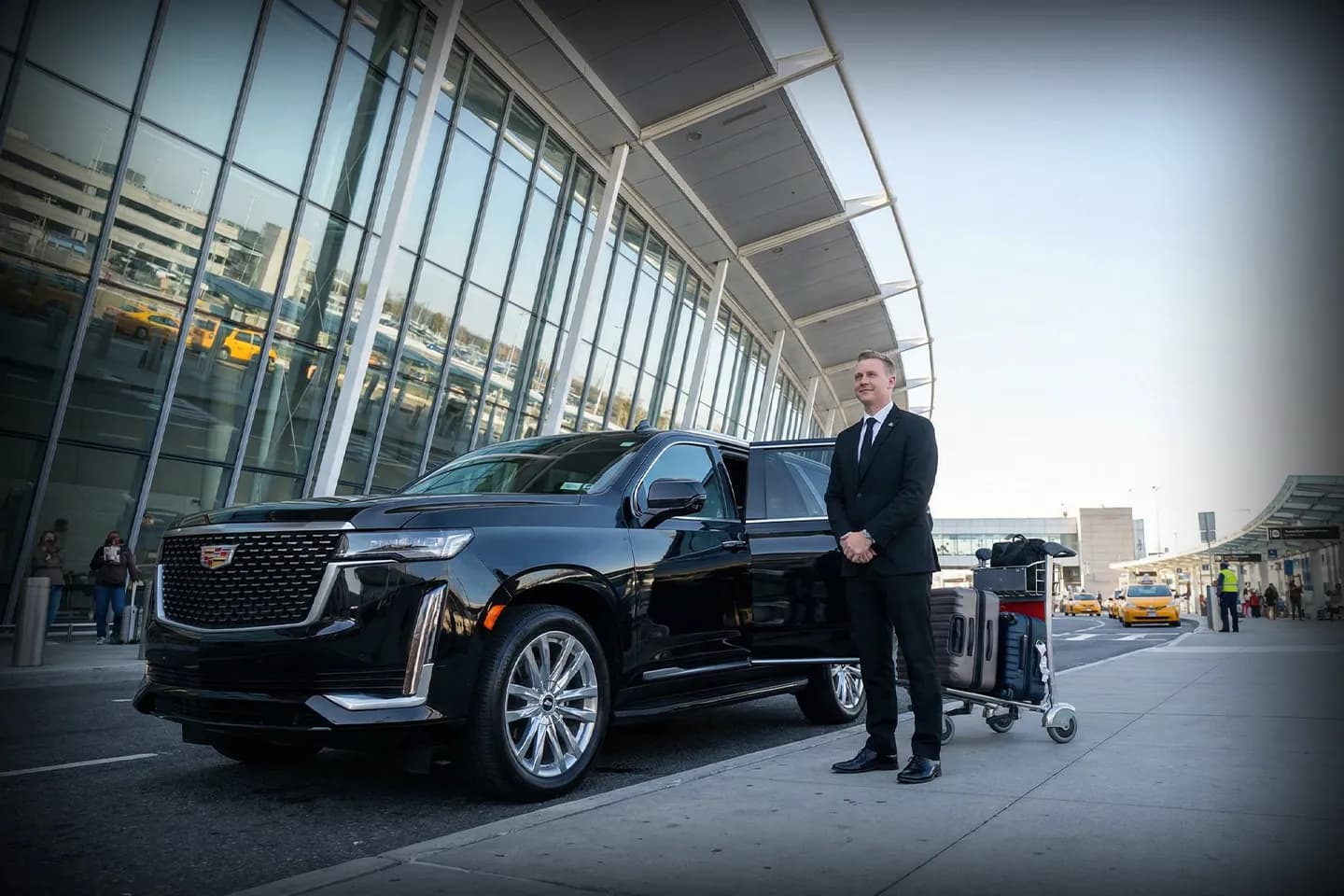
The wait for an Uber or Lyft at JFK during international arrivals can stretch to 30–40 minutes, often involving a chaotic handoff at the rideshare lot. Drivers cancel and reassign. For travelers carrying valuables, traveling with family, or arriving late at night, a pre-booked car service eliminates the entire failure mode. The driver is at the curb when you exit, holding a sign with your name.
Family and Child Transportation
Car seats, family handling, and overall care quality matter for family transport. Licensed car services typically offer car seats on request and dispatch drivers experienced with family service. We provide infant, toddler, and booster seats at no additional charge. Rideshare car seats are inconsistent at best and often unavailable.
Executive and Sensitive Trips
Carrying sensitive corporate materials, traveling with executives, or moving with valuable belongings increases the importance of driver vetting and discretion. Pre-booked car services dispatch known, vetted drivers to specific assignments. Rideshare matches you with whoever happens to be available.
So Which Is Actually Safest?
In aggregate statistics, all three categories are reasonably safe. Most rides in any of them go fine. The differences become real in edge cases and high-stakes situations.
For purely casual, daytime, short-distance Manhattan rides, the safety differences are small enough that convenience and cost can drive your choice without much risk. For airport transfers, late-night rides, family transport, executive travel, or any trip where vetting and accountability genuinely matter, a licensed car service offers the highest baseline of all three options. The chauffeur is fully TLC-licensed and additionally vetted by the operator. The vehicle is owned, maintained, and inspected by a company with reputation at stake. The insurance coverage is 1.5x to 5x what you’d get in a yellow cab. The accountability path is direct and immediate.
Reserve Your NYC Chauffeur with Union Limousine
Ready to experience professional chauffeur service backed by a fully licensed Tri-State fleet? Reaching us is easy.
- Email: info@unionlimousine.com
- Phone: +1 (718) 514-9881
- Online Booking: Reserve now at www.unionlimousine.com
One-time airport transfer or long-term corporate account, our team responds in minutes and confirms every detail in writing.
Conclusion
Safety in NYC transportation isn’t a binary. Yellow cabs, rideshare, and licensed car services all clear baseline thresholds. The real question is which category aligns best with the specific trip you’re booking. For casual short rides, all three are reasonably safe and convenience can drive the choice. For airport transfers, late-night travel, family transport, executive trips, and any moment where vetting and accountability genuinely matter, a licensed car service offers the highest combined safety profile of the three.
If safety, vetting, insurance, and accountability are priorities for your next NYC trip, book your next ride with Union Limousine. Every chauffeur on our team is TLC-licensed and additionally vetted, every vehicle in our fleet is owned and maintained in-house, and our insurance coverage is at the upper end of what NYC operators carry. From a single airport transfer to a 56-passenger charter coach, the safety standard is the same.
Frequently Asked Questions
Admin User
Related Blogs








Related Fleets